
What does a prosthetic limb cost?
Prosthetic and orthotic costs vary with the technology and your goals — and most of it is usually covered by insurance. Here's how pricing and coverage work, and how we help.

What affects the price of a prosthetic limb
No two prescriptions are the same, so cost varies widely. The biggest factors are the components and your activity goals:
- Knee and ankle technology — a mechanical knee costs far less than a microprocessor knee, and microprocessor ankle-foot systems add to the total.
- Upper-limb terminal devices — body-powered hooks and hands are the most economical; myoelectric and multi-articulating bionic hands are the most advanced.
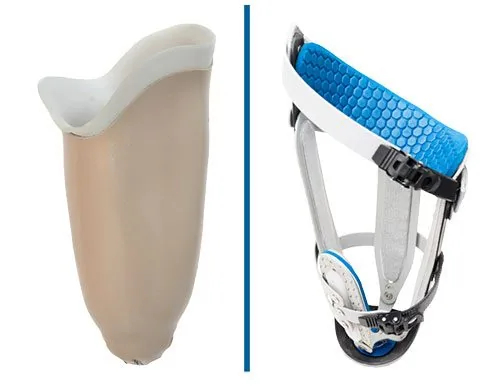
- Socket design and materials — custom carbon-fiber sockets and adjustable systems such as RevoFit cost more than basic designs, but can improve comfort and reduce remakes.
- Your activity level (K-level) — Medicare and most insurers tie the components they will cover to your functional level.
Typical cost ranges
As a general guide, basic prosthetic limbs are commonly reported in the low-thousands of dollars, while advanced microprocessor knees and myoelectric or bionic systems can range into the tens of thousands. These are broad industry ranges, not a quote — your actual figure depends on your prescription, and for most patients the device is billed to insurance rather than paid out of pocket. We give you a clear, written estimate after your evaluation. How much does a prosthetic leg cost? →
Insurance, Medicare, Medicaid & VA coverage
Most health plans cover medically necessary prosthetic and orthotic devices when you have a prescription from your physician.
- Private insurance — coverage and out-of-pocket costs depend on your plan; prior authorization is often required.
- Medicare — typically covers 80% of the approved amount for medically necessary prosthetics and orthotics after your Part B deductible, with the remaining 20% subject to any secondary coverage.
- Medicaid — Illinois (HFS), Indiana and Nevada Medicaid cover medically necessary prosthetic and orthotic devices with state-specific rules and limits; we verify your benefits before anything is ordered.
- Veterans (VA) — eligible veterans generally receive prosthetic and orthotic care through their VA benefits.
Some advanced devices — for example, myoelectric arm orthoses — are still reviewed case-by-case by certain insurers, so we confirm your specific coverage before anything is ordered.
How Quantum helps with cost
We handle the paperwork so you can focus on your recovery. Before we build anything, our team verifies your benefits, submits prior-authorization requests, documents medical necessity with your physician, and appeals denials when needed. We also discuss financing options for any remaining balance. Your initial consultation is free and no referral is required to be seen.
Accreditation. Quantum Prosthetics & Orthotics is an ABC-accredited facility (American Board for Certification in Orthotics, Prosthetics & Pedorthics), accredited for Orthotics and Prosthetics, and a Medicare DMEPOS-accredited supplier.
How much does a prosthetic leg cost?
It depends on the components and your activity level. Basic prosthetic legs are commonly in the low-thousands of dollars, while microprocessor knees and advanced systems can reach the tens of thousands. Most patients have the device billed to insurance, and we provide a written estimate after your evaluation.
Does insurance cover prosthetic limbs?
Most plans cover medically necessary prosthetics and orthotics with a physician's prescription. Coverage, prior-authorization requirements, and out-of-pocket costs vary by plan — we verify your specific benefits before ordering.
Does Medicare cover prosthetics?
Medicare Part B typically covers 80% of the approved amount for medically necessary prosthetic and orthotic devices after your deductible. The remaining 20% may be covered by secondary insurance.
Do I need a referral to get started?
No referral is needed to book a free consultation at Quantum. A physician's prescription is required for a device to be covered by insurance, and we can help coordinate that.
What happens if my insurance denies coverage?
We document medical necessity and file appeals on your behalf. If a balance remains, we'll talk through financing options so cost isn't a barrier to your mobility.