Upper-limb prosthetics
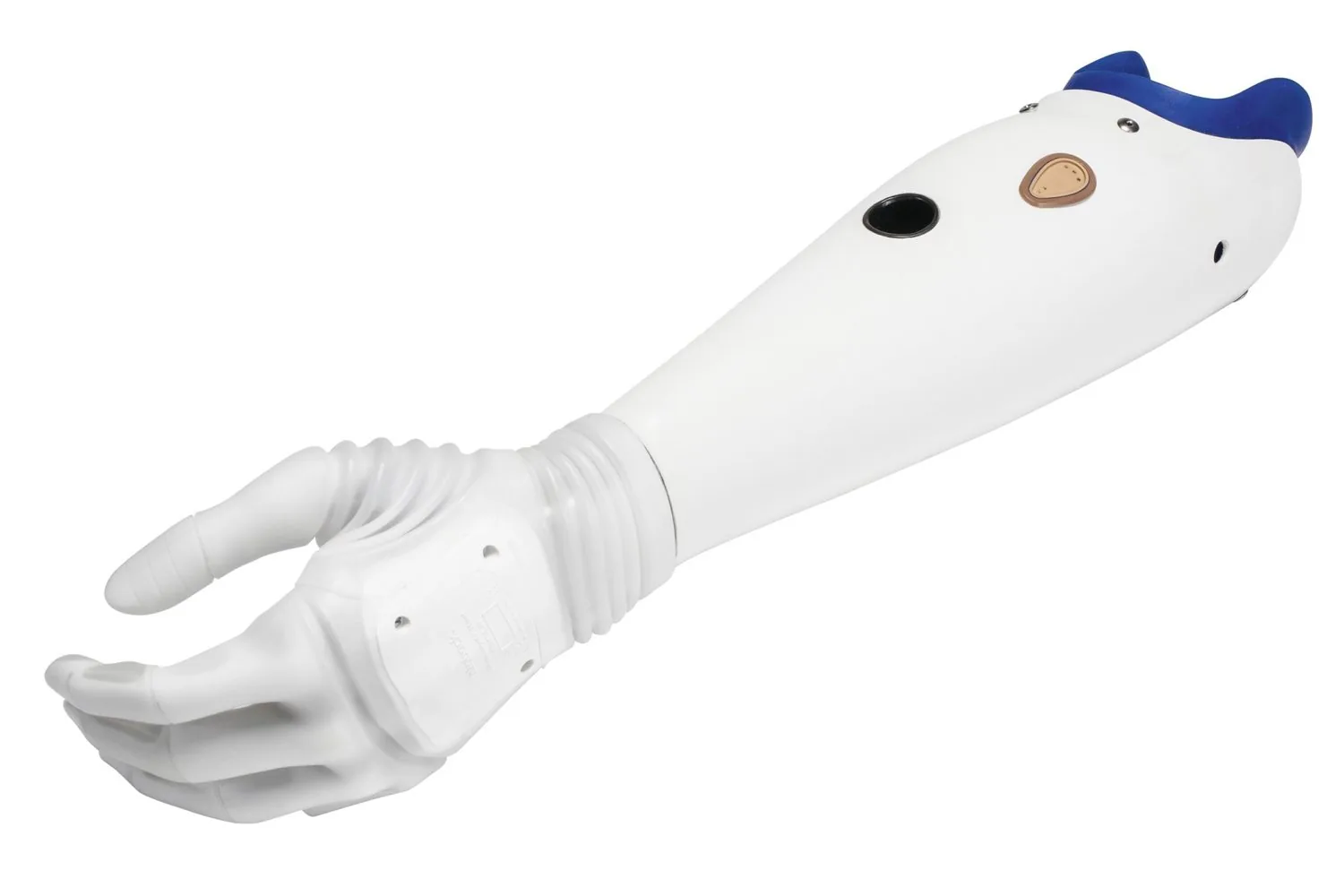
Myoelectric and multi-articulating bionic hands and arms — from partial hand through shoulder level — fitted to how you actually live.
What care here looks like.
An arm prosthesis has to do something a leg prosthesis never does: it has to be precise. Walking is repetitive and largely automatic. Reaching for a coffee cup, buttoning a shirt, holding a phone while you type — those are a hundred different grips, forces and wrist positions, and no single device does all of them equally well.
That's why the first question we ask isn't which hand you want. It's what you're trying to get back to. A machinist, a new parent and a guitar player will leave here with three different prescriptions, and sometimes with more than one device each.
We fit every level — partial hand, transradial (below elbow), transhumeral (above elbow), and shoulder disarticulation — across six clinics in Illinois, Indiana and Nevada.
- Myoelectric and multi-articulating bionic hands controlled by your own muscle signals.
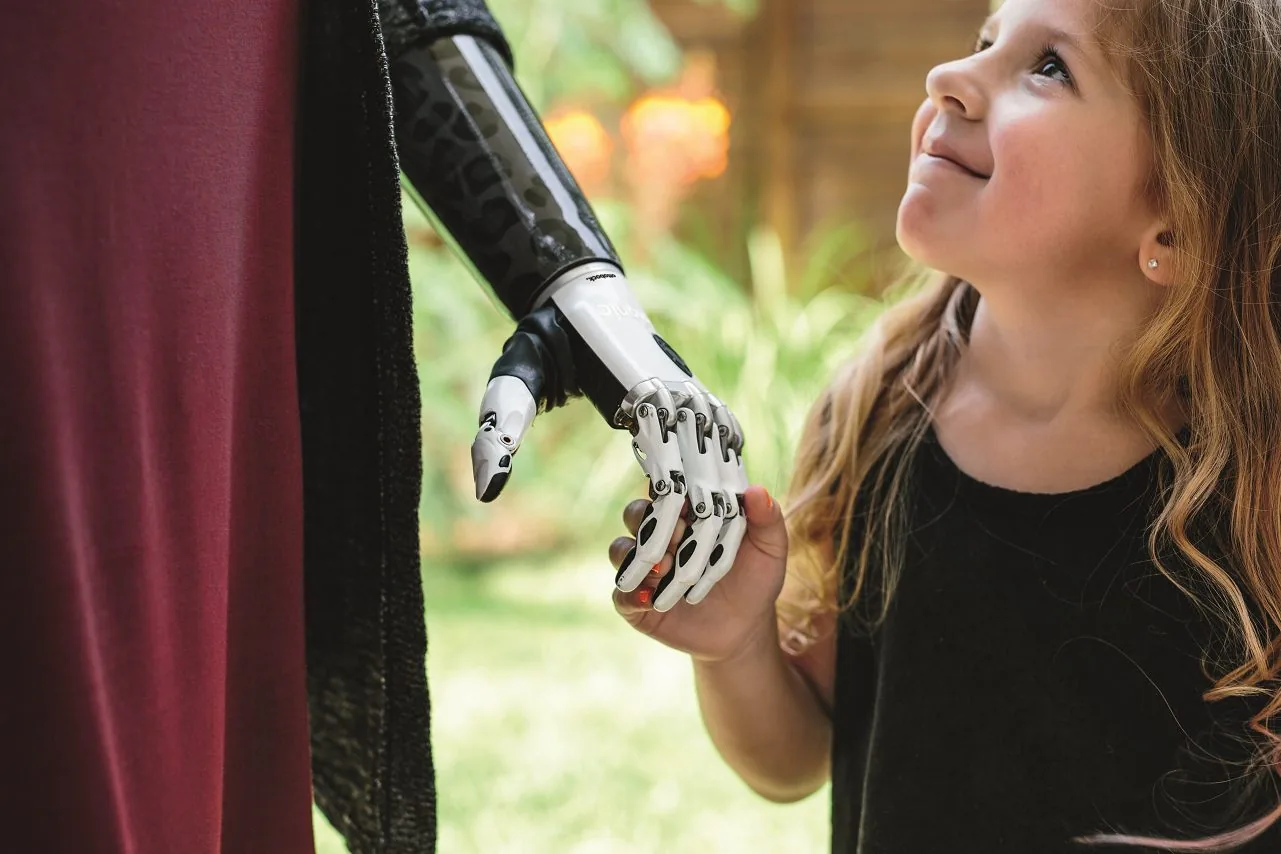
- Our clinicians are Össur-certified for the i-Limb line — including the i-Limb Quantum — and i-Digits myoelectric hand and partial-hand systems.
- Solutions across every level — partial hand, trans-radial, trans-humeral, and shoulder disarticulation. Partial hand amputation: prosthetic options →
- Body-powered and activity-specific options when they're the better fit for your life and work.
- Candidacy for advanced techniques like targeted muscle reinnervation (TMR) with our surgical partners. TMR: a patient guide →
How upper-limb prostheses are controlled
There are four ways to drive an arm prosthesis, and the right answer is often a combination.
Myoelectric control
A myoelectric prosthesis reads the electrical signals your muscles produce when they contract — the same signals that used to move your hand — and translates them into grip and finger movement. Electrodes sit against the skin inside the socket. When you fire the muscle, the hand responds.
What this gets you is control without a harness and without cables across your back, and grip strength that doesn't depend on your shoulder. Modern multi-articulating myoelectric hands drive each finger with its own motor, so the hand can form distinct grips — precision pinch, tripod, lateral key, power grip — rather than opening and closing as a single unit.
What it costs you is weight, charging, and a device that doesn't love water or dust. A myoelectric hand is heavier than a body-powered hook and needs care that a mechanical device doesn't.
Our clinicians are Össur-certified for the i-Limb line, including the i-Limb Quantum, and for i-Digits partial-hand systems — fitting, socket work, myoelectric setup, service and repairs.
Body-powered control
A cable and harness link the prosthesis to your shoulder. Shrug or extend, and the cable opens or closes the terminal device.
This is the older technology and it is still, for a lot of people, the better one. Body-powered devices are lighter, tougher, cheaper to repair, and they give you something myoelectric devices largely can't: proprioceptive feedback. You feel the tension in the cable, so you know how hard you're gripping without looking. People who work outdoors, around water, or in dirty environments frequently choose body-powered as their primary device and keep a myoelectric hand for social and fine-motor situations.
Pattern recognition
Instead of two electrodes reading two muscle sites, pattern-recognition systems read a larger array and learn the pattern your residual limb produces for each intended movement. For some users — particularly at higher levels — this makes switching between grips faster and less deliberate than the muscle co-contraction most conventional myoelectric systems use to change mode.
It requires training, and it suits some residual limbs better than others. We'll tell you honestly whether you're a candidate.
Passive and activity-specific devices
A passive prosthesis doesn't grip, but it stabilizes, bears weight, and restores the visual symmetry that matters to a lot of people more than they expect. Activity-specific terminal devices — for weightlifting, cycling, photography, swimming, instruments, tools — do one job extremely well and nothing else.
Most people we fit end up with more than one device. That's not a failure to choose; it's the correct answer.
Care by amputation level
Partial hand
The hardest level to fit well and the one most often under-served. Options range from passive finger prostheses through i-Digits powered digits, depending on how much of the hand and how much active wrist and palm function remain. Small differences in residual anatomy change what's possible here more than at any other level.
Partial hand amputation: prosthetic options →
Transradial (below elbow)
The most commonly fitted upper-limb level and the one with the widest device selection. Your elbow is intact, which means the prosthesis only has to replace wrist and hand — and you keep natural elbow positioning, which matters enormously for function. Both myoelectric and body-powered options are strong here.
Transhumeral (above elbow)
Now the device has to supply elbow function as well as a hand, and the two have to be sequenced. Hybrid setups — a body-powered elbow with a myoelectric hand, for instance — are common and often outperform an all-in-one solution. Socket fit and suspension become considerably more demanding at this level.
Shoulder disarticulation and forequarter
The most complex fittings we do. Control sites are limited, the device is heavier, and the socket has to distribute load across the torso. Realistic goal-setting matters more here than anywhere else, and this is the level where targeted muscle reinnervation most often changes what's achievable.
Targeted muscle reinnervation (TMR)
TMR is a surgical procedure — performed by our surgical partners, not in our clinics — that reroutes the nerves that used to control your hand and arm to remaining muscle in the residual limb or chest. Those muscles then contract when you think about moving your hand, creating new and more intuitive myoelectric control sites.
For higher-level amputees in particular it can turn two usable control signals into several, and it is also used to treat neuroma and phantom limb pain. It isn't right for everyone, and it requires a fitting team that understands how to work with the result. We assess candidacy and coordinate with the surgical team.
What the process actually looks like
Consultation. Free, no referral needed. We look at your residual limb, talk through what you do and want to do, and tell you what's realistic. Insurance verification starts here.
Casting and socket design. The socket is the part that determines whether you wear the device or leave it in a drawer. We take the time here, and we treat comfort as the requirement, not the bonus.
Fitting and control setup. Electrode placement, grip programming, and calibration to your signals.
Training. Most people gain functional control over several weeks. Early on it takes deliberate thought; with practice it stops being something you think about. We provide hands-on practice, not a handover and a leaflet.
Follow-up. Residual limbs change shape, especially in the first year. Sockets need adjustment. We stay available after the fitting — that's the part a lot of people find missing elsewhere.
Cost and insurance
Medically necessary upper-limb prostheses are covered by Medicare, Medicaid in Illinois, Indiana and Nevada, and most commercial plans with a physician's prescription. Coverage varies meaningfully by plan and by device class — advanced multi-articulating hands face more documentation scrutiny than basic devices.
We verify your benefits and prepare the medical-necessity documentation before you commit to anything. You will know your expected out-of-pocket cost before we order a device.
People we help most.
- New upper-limb amputees weighing myoelectric, body-powered, and activity-specific options.
- People who want more function from a hand or arm than their current device gives them.
- Candidates for nerve procedures like TMR who want a fitting team that understands them.
Care that earns the comparison.
- A free consultation, always — no referral needed to talk.
- Comfort-first sockets and fittings: we treat comfort as the whole point, not a luxury.
- The newest technology, available now, through our dedicated trial clinics.
- Six clinics across Illinois, Indiana, and Nevada — with a team that stays beside you after the fitting.
Next step
Talk it through, free.
A consultation costs nothing and answers most questions in one visit — coverage included. No referral needed.
Book a free consultationCall now