Partial hand amputation: prosthetic options
The hand is extraordinarily intricate, so losing a finger or part of the hand affects far more than appearance — it changes grip, pinch, and the countless small actions of daily life. Modern partial-hand prosthetics have advanced dramatically, from natural-looking passive fingers to individually powered digits. This guide walks through the options.
The short version
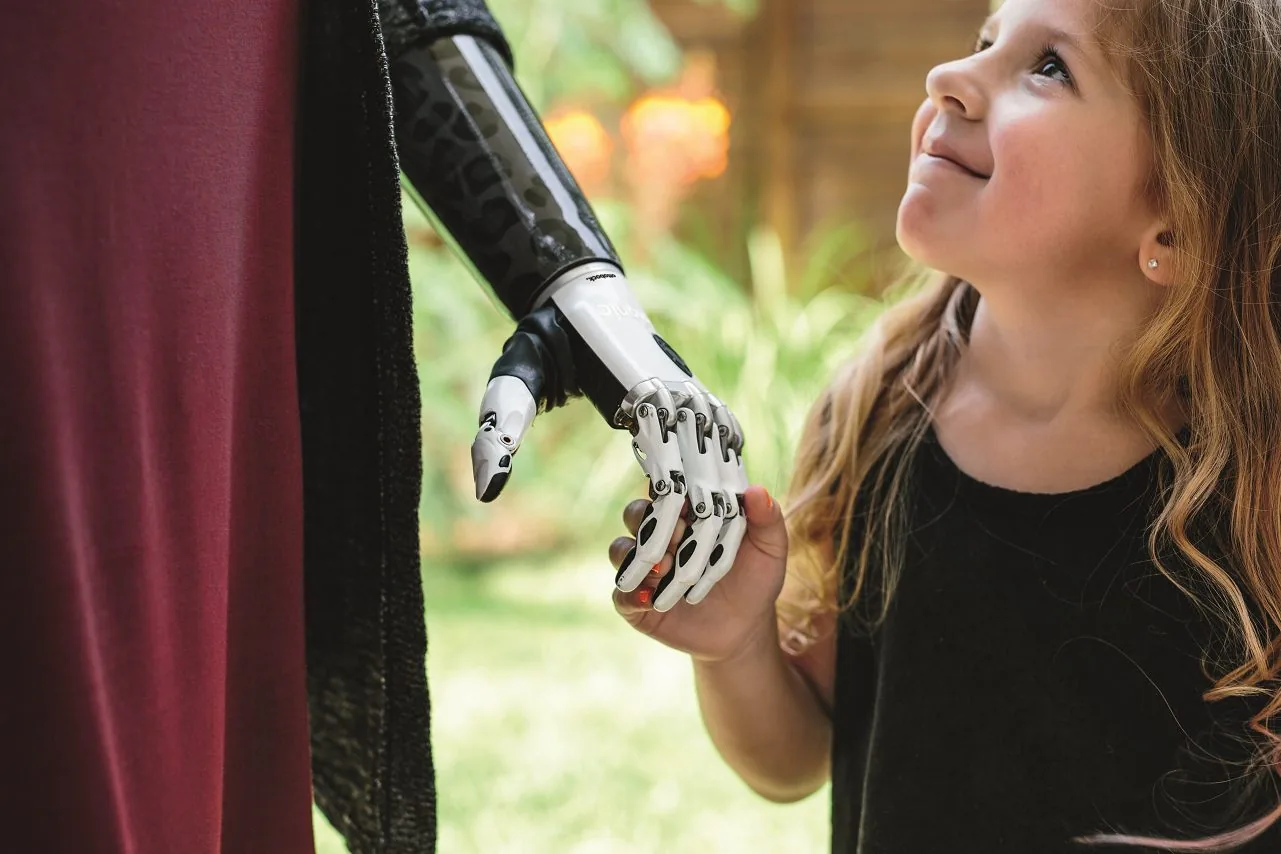
The right device depends on what was lost and what you want to do. Passive prostheses restore appearance and provide a stable surface to work against; body-powered designs use your remaining motion to create grip; and myoelectric or mechanically driven fingers can restore active grasp. Many people are surprised how much function a well-designed partial-hand prosthesis returns.
Why partial-hand loss is uniquely challenging
Your fingers and thumb work as a team to pinch, grip, and stabilize. Losing even one changes that balance, and the thumb in particular is responsible for a large share of hand function. A good prosthesis aims to restore opposition — the ability to bring a digit against another surface — because that is what makes grasping possible.
The options
- Passive functional prostheses: custom, often lifelike fingers that restore appearance and give you a stable post to push, stabilize, and oppose against.
- Body-powered designs: these harness the movement of your remaining joints (for example, wrist or knuckle motion) to flex the prosthetic digits and create grip.
- Mechanically and myoelectrically driven fingers: articulating prosthetic fingers that move to create active grasp, including powered options controlled by muscle signals.
What shapes the choice
The level of amputation, how much hand and motion remain, the condition of the skin, your daily tasks, and your goals all matter. Some people prioritize a natural look; others want maximum grip for work; many value durability. There is rarely one perfect answer — the device is matched to your life, and some people use more than one.
Fitting and learning
Partial-hand prosthetics are highly customized, so fitting is detailed and iterative: capturing the exact shape, building and trialing the device, and refining it for comfort and function. With practice — often with an occupational therapist — control becomes more natural and useful in everyday tasks.
What daily life can look like again
The goal of a partial-hand prosthesis is the quiet return of ordinary tasks: holding a fork, gripping a steering wheel, carrying a bag, typing, opening a jar. Even restoring opposition — the ability to press a digit against a surface — brings back a remarkable range of function. People often rediscover hobbies and work tasks they assumed were gone. Progress comes with practice, and an occupational therapist helps you translate the device’s capabilities into the specific things you want to do.
You don't always have to choose between looks and function
It’s a common worry that a natural-looking hand means giving up function, or vice versa. Modern options blur that line: lifelike passive prostheses can still provide a stable, useful surface, and powered fingers can be finished to look natural. Some people keep more than one device — a hard-wearing functional one for work and a lifelike one for social settings. The right answer is whatever serves your life, and you don’t have to decide it alone or all at once.
Insurance and getting started
Partial-hand prosthetics are often covered when they’re medically necessary, though coverage varies by plan and by the type of device. We review your specific benefits with you and handle the documentation that supports a claim, so cost is clear before anything moves forward. Getting started is simple: a no-pressure evaluation where we look at what remains, listen to the tasks that matter to you, and lay out realistic options. You can read more on our cost & insurance page, and we’ll guide the paperwork from there.
Questions about your own situation? A free consult is the fastest answer
We will look at what remains, listen to your goals, and lay out realistic options. Learn about our upper-limb prosthetics and prosthetic technology, or book a free consultation.