
Drop foot after stroke: how AFO braces help
Drop foot — also called foot drop — is difficulty lifting the front of the foot. The toes catch on the ground, walking feels unsteady, and many people compensate by swinging the leg out to the side or lifting the knee higher to clear the floor. It is not a disease in itself; it is a sign that the muscles or nerves that raise the foot are not working as they should. After a stroke, it is one of the most common reasons walking becomes harder.
An ankle-foot orthosis, or AFO, is the brace most often used to manage it. This guide explains what causes drop foot, how an AFO helps, the main types your clinician will weigh, and what to expect from the fitting.
The short version
An AFO holds the foot and ankle in a safer, more functional position so the toes clear the ground, your steps feel more stable, and walking takes less effort. The right brace depends on the cause, how much support you need, your activity level, and whether spasticity or swelling is involved. A custom-fit device made and adjusted by an orthotist usually delivers the best comfort, alignment, and skin protection.
What causes drop foot?
Drop foot happens when there is weakness or interrupted nerve signals to the muscles that lift the foot. Common causes include:
- Stroke — brain injury can weaken the muscles on one side and disrupt the timing of the lift during walking.
- Nerve injury — pressure on or damage to the peroneal nerve near the knee is a frequent culprit.
- Neurological conditions — multiple sclerosis, cerebral palsy, and similar conditions can affect foot control.
- Spinal or disc problems and certain types of nerve damage from other conditions.
Because the underlying cause matters, foot drop is usually evaluated by a medical team — often a physician and physical therapist — alongside the orthotist who fits the brace.
How an AFO helps
An AFO supports the ankle so the foot does not drop during the swing phase of walking. That does several things at once: it improves toe clearance so you trip less, it gives the ankle a stable base at heel strike, it can reduce the fatigue of compensating with other muscles, and for many people it simply makes walking feel safer. Some braces also help control spasticity or keep the foot from rolling.
The main types of AFO
There is no single “best” AFO — the right one is matched to your needs:
- Posterior leaf spring — a flexible brace for milder, flexible foot drop; light and low-profile, it lifts the toes while allowing some natural motion.
- Solid-ankle AFO — more rigid, for people who need firm support and stability.
- Hinged (articulated) AFO — allows controlled ankle movement, which can help with a more natural gait and with stairs.
- Carbon-fiber dynamic AFO — lightweight with energy return, often suited to more active users.
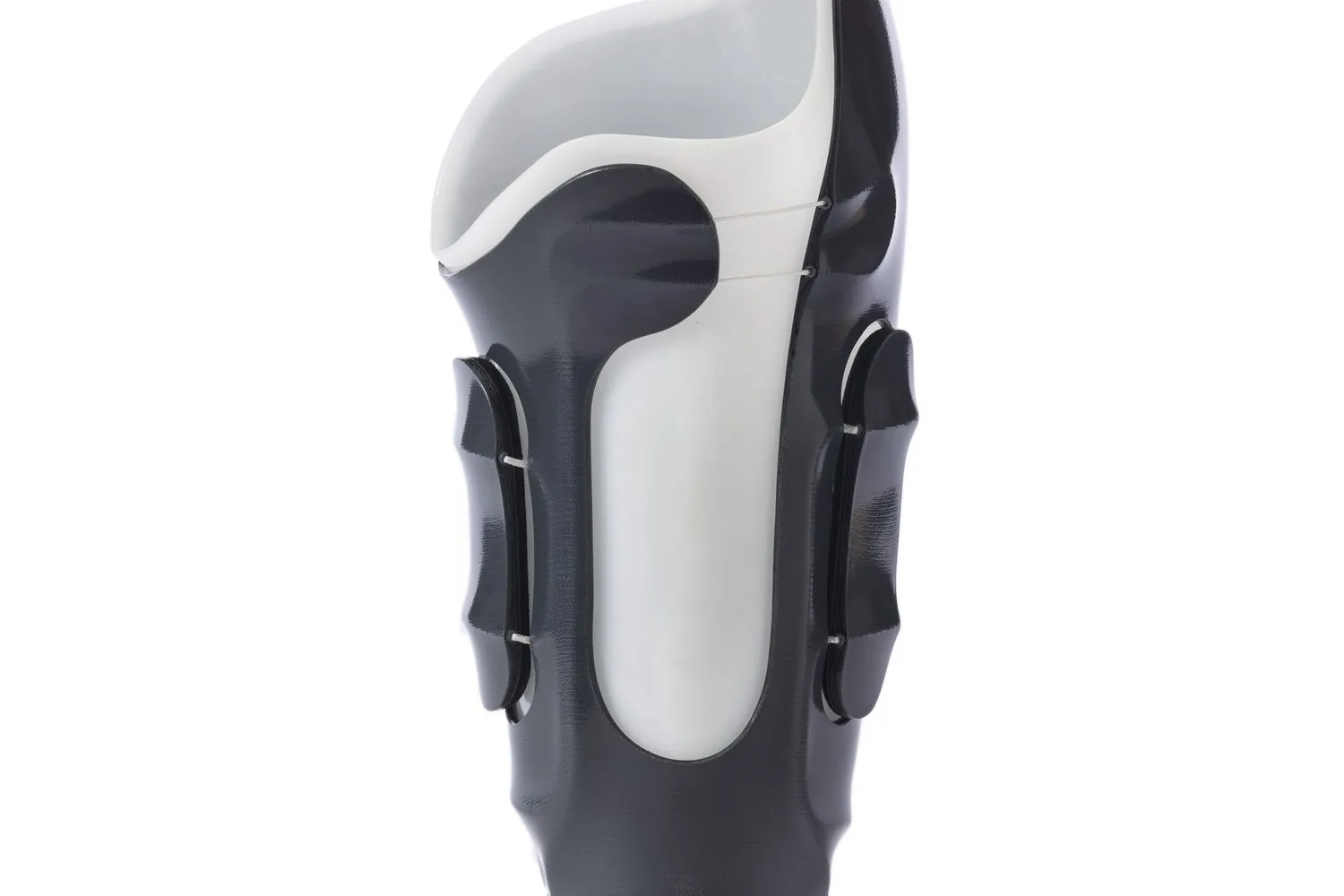
- Custom vs. prefabricated — an off-the-shelf brace can work for straightforward cases, while a custom-molded AFO is shaped to your leg for better fit, alignment, and skin protection, which matters when there is spasticity, swelling, or a sensitive limb.
For some people after stroke, functional electrical stimulation (FES) — a device that gently stimulates the nerve to lift the foot during walking — is an alternative or complement to a brace. Whether it is appropriate is part of the clinical conversation.
What to expect from the fitting
Getting an AFO is a step-by-step process:
- Evaluation — we assess your strength, range of motion, gait, and goals, usually in coordination with your therapy team.
- Casting or scanning — for a custom device, we capture the shape of your foot and lower leg.
- Fitting and gait check — we confirm the brace positions your foot correctly and watch you walk to fine-tune it.
- Shoes and wear-in — we talk through footwear that accommodates the brace and how to build up wearing time comfortably.
- Adjustments — follow-up keeps the fit comfortable and effective as you progress in rehab.
Will it fix drop foot permanently?
An AFO manages the symptom — it helps you walk more safely now — rather than curing the underlying cause. Depending on what is behind your foot drop and how recovery goes, some people need the brace long term while others use it during rehabilitation. Your medical team guides that trajectory; the brace is one part of a larger plan that often includes physical therapy.
Getting the most from your AFO
A brace works best as part of a routine. Wearing it consistently during walking, following your therapy team’s plan, and keeping up any prescribed exercises all help you move better and protect the joints and muscles around the ankle. Build up wearing time gradually at first, and check your skin when you take the brace off — especially in the early weeks — for any red marks that do not fade. Shoes with a removable insole and a slightly roomier fit make the brace much easier to live with.
How an AFO fits into stroke recovery
After a stroke, regaining mobility is usually a team effort. Physical therapy rebuilds strength and retrains the gait, while an AFO provides the stability and toe clearance that make practice safer and more productive. The two reinforce each other: a well-fit brace lets you do more in therapy, and progress in therapy may change what you need from the brace over time. We coordinate with your rehab team so the device keeps pace with your recovery rather than holding it back. If the stroke affected your arm as well, the MyoPro powered arm brace applies the same principle to the upper limb.
Living with drop foot day to day
Most people adapt quickly once the fit is right. Stairs, uneven ground, and getting in and out of a car tend to be the early challenges, and they ease with practice and the confidence the brace provides. If your footing still feels unreliable, tell us — small adjustments to the brace’s stiffness, trim lines, or alignment often make a meaningful difference. The goal is not just to walk, but to walk without thinking about every step.
When to see a specialist
It is worth getting evaluated if you are tripping or catching your toes, if walking has become tiring or unsteady, if you have had a stroke or nerve injury affecting one leg, or if an existing brace is uncomfortable or no longer doing its job. New or suddenly worsening foot drop should be checked by a physician promptly, because the cause guides the treatment.
Questions about your own situation? A free consult is the fastest answer
The right AFO is the one matched to your cause, your gait, and your goals. Learn more about our neuro & stroke orthotics and custom orthotics, or book a free consultation and we will assess what will help you most. Every AFO we make is custom, and we fit them at all six of our clinics — Justice, Tinley Park, Munster, Rockford, Las Vegas, and Henderson.