
How long does a prosthetic leg last?
As a general rule, a prosthetic leg lasts about three to five years — and Medicare treats roughly five years as a device’s “useful life” for replacement purposes.[1] But that single number hides something important: a prosthesis is made of parts that wear on different schedules. The socket and the components rarely reach the end of their lives at the same time.
The socket usually changes first
The socket is custom-made to your residual limb, and your limb’s shape changes — especially in the first year after amputation, and again with weight changes, muscle changes, or aging. When a socket no longer fits snugly, it stops being comfortable and safe long before the knee or foot wears out. A new socket (or a liner change) is one of the most common adjustments, and it doesn’t mean the whole leg needs replacing.
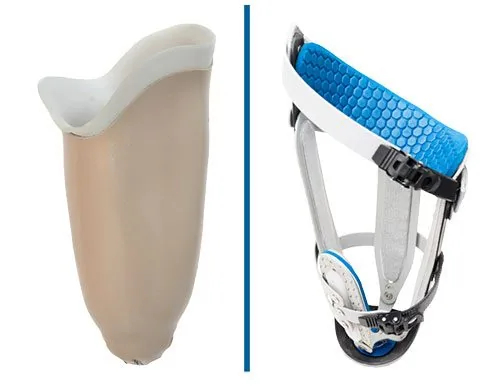
Components wear on their own timeline
Feet, knees, and connectors are built to be durable, but they aren’t permanent. Mechanical parts develop wear; microprocessor knees and feet have batteries and electronics with their own service life. High activity, body weight, terrain, and exposure to water and dust all accelerate wear. Routine maintenance and prompt repair extend the life of the device considerably.
What shortens (or extends) lifespan
- Activity level: a very active user wears components faster than an occasional household walker.
- Body and limb changes: weight or volume shifts change socket fit.
- Environment: water, grit, and heat are hard on non-rated components.
- Maintenance: regular check-ups, cleaning, and timely repairs add years.
When to plan a replacement
Don’t wait for a failure on the sidewalk. Signs it’s time for a review include persistent discomfort or pressure spots, a socket that feels loose or that you’re adding sock plies to compensate for, visible cracking or component wear, unusual noises, or a knee/foot that no longer matches your current activity. An annual check-up lets your prosthetist catch these early. Common prosthetic problems and how to solve them →
Coverage note: Medicare and most insurers cover repairs for normal wear and replacement when a device is worn out, damaged, or no longer functional — documentation of medical need is what drives approval. See how Medicare coverage works.
If your leg is approaching the 3–5 year mark, or simply doesn’t feel right anymore, a free consultation is the easiest way to find out whether you need an adjustment, a new socket, or a new device. Technology & fabrication →
Sources
- Code of Federal Regulations, 42 CFR § 414.210(f): replacement of items and the reasonable useful lifetime. ecfr.gov