
Microprocessor knees: how they work and who they're for
For an above-knee amputee, the knee unit is the part of the prosthesis that most affects how safe and natural walking feels. Microprocessor knees — sometimes called MPKs or computerized knees — brought a genuine leap forward by sensing your movement and adjusting in real time. This guide explains what they do, who benefits, and how to think about them alongside mechanical knees.
The short version
A microprocessor knee uses sensors and a small computer to adjust its resistance many times per second, matching how you’re actually moving. The payoff is steadier walking, better control on stairs and slopes, help recovering from stumbles, and less mental effort. They aren’t for everyone, and coverage depends on documented need, but for the right person they can be transformative.
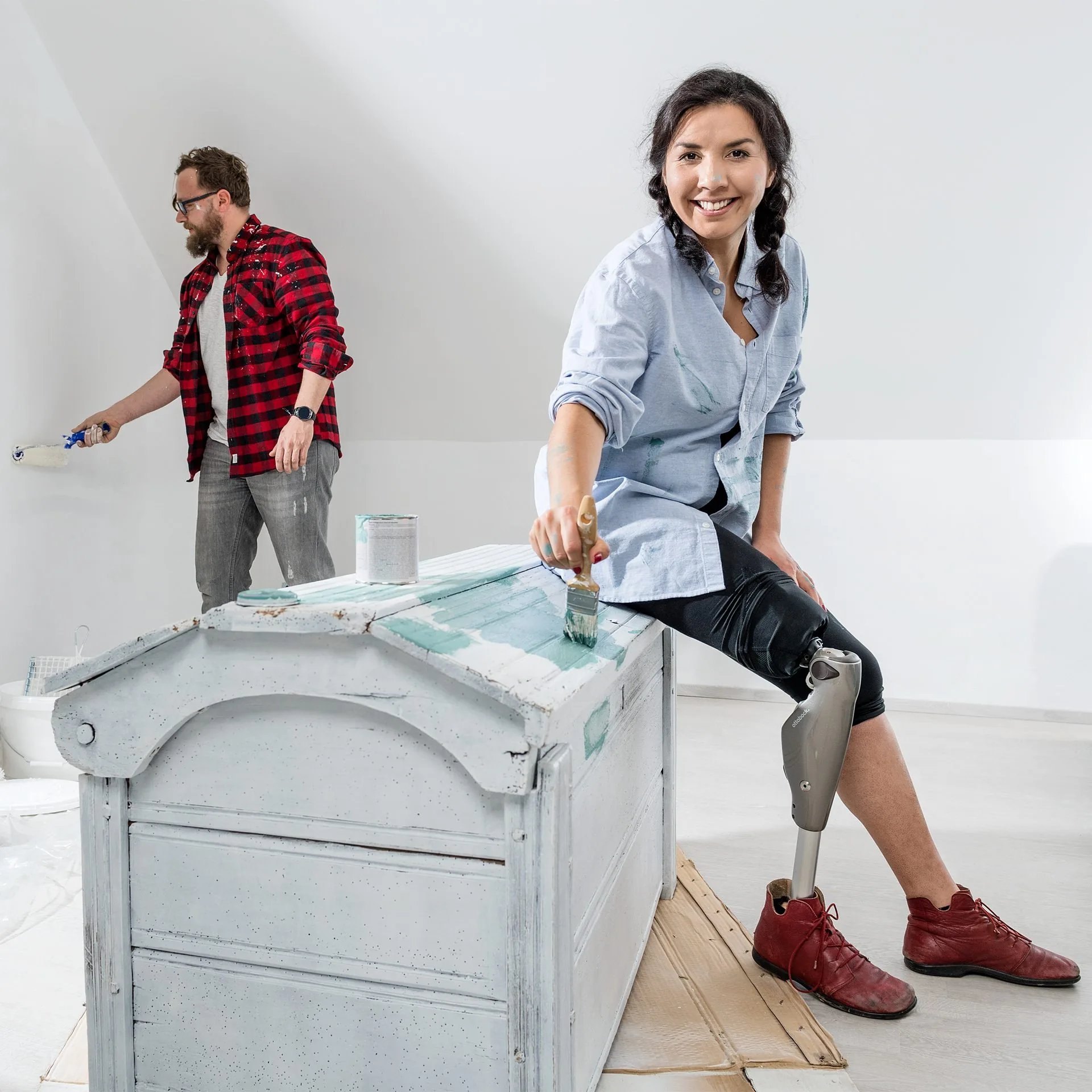
How they work
Inside the knee, sensors track things like load, angle, and the timing of your gait, dozens of times a second. The processor reads that data and instantly tunes the knee’s resistance — firm and supportive when you’re bearing weight, freer when it’s time to swing the leg through. Because the knee is constantly adapting, you don’t have to consciously control it the way some mechanical knees require, which frees up attention for everything else you’re doing.
What they improve
- Stability and fall prevention: the knee resists buckling when you need support, a major safety benefit.
- Stumble recovery: if you trip, the knee can stiffen to help keep you upright.
- Stairs and slopes: many allow a more natural, step-over-step descent and better control going downhill.
- Less effort: smoother swing and automatic control can reduce the energy and concentration walking demands.
Who is a candidate?
Candidacy depends on your potential activity level — often described with Medicare’s K-level system — along with your overall health, your goals, and your ability to use and maintain the device. Microprocessor knees are frequently appropriate for people who walk at variable speeds, navigate community environments, or would benefit meaningfully from added stability. Our guide to K-levels and coverage explains how this is assessed.
Examples and differences
Several manufacturers make microprocessor knees, and models differ in how they handle stairs, water resistance, battery life, and how much they actively power movement versus intelligently resist it. Rather than crown a single “best” knee, the right choice matches the device’s strengths to your life. For a head-to-head on two well-known options, see our C-Leg vs Genium comparison.
Microprocessor vs mechanical knees
Mechanical knees are durable, lower-maintenance, and need no charging, and for steady, predictable walking they serve many people very well. Microprocessor knees add adaptive stability and ease at the cost of higher complexity, periodic charging, and a higher price. Neither is universally better — the honest answer comes from your activity, environment, and goals.
Living with one
Microprocessor knees are charged like other electronics and benefit from routine maintenance to keep the sensors and software working reliably. Most are built to handle everyday life, though water resistance varies by model, so it’s worth knowing your device’s limits. Your prosthetist sets it up for your gait and fine-tunes it over time.
Getting the most from your knee
A microprocessor knee rewards a little routine. Charge it on the schedule your prosthetist recommends so it’s never caught low mid-day, and keep up periodic maintenance so the sensors and software stay accurate. Many knees offer modes or settings for activities like cycling or relaxed sitting — ask your prosthetist to set up and explain the ones that fit your life. And as your strength and walking change, especially in the first year, a tune-up keeps the knee matched to you. The technology works best as a partnership with your clinician.
Questions about your own situation? A free consult is the fastest answer
We’ll help you understand whether a microprocessor knee fits your goals and coverage. Learn about our lower-limb prosthetics and technology, or book a free consultation.