
Above-knee (transfemoral) amputation: recovery and your prosthesis
An above-knee amputation — clinicians call it transfemoral, meaning through the thigh bone — asks more of both the patient and the prosthesis than a below-knee amputation, because the prosthesis has to replace the knee as well as the lower leg and foot. The good news is that modern components, especially at the knee, have made confident, comfortable walking a realistic goal for many people. Here is what the journey looks like.
The short version
Because your own knee is gone, the prosthesis must provide stability and a controlled bend, which makes the socket and knee unit the heart of the device. Walking takes more energy than with a below-knee prosthesis, so fit, alignment, and the right components matter enormously. Recovery follows the familiar path — healing, a temporary prosthesis, training, and a definitive limb — with extra emphasis on balance and stability training.
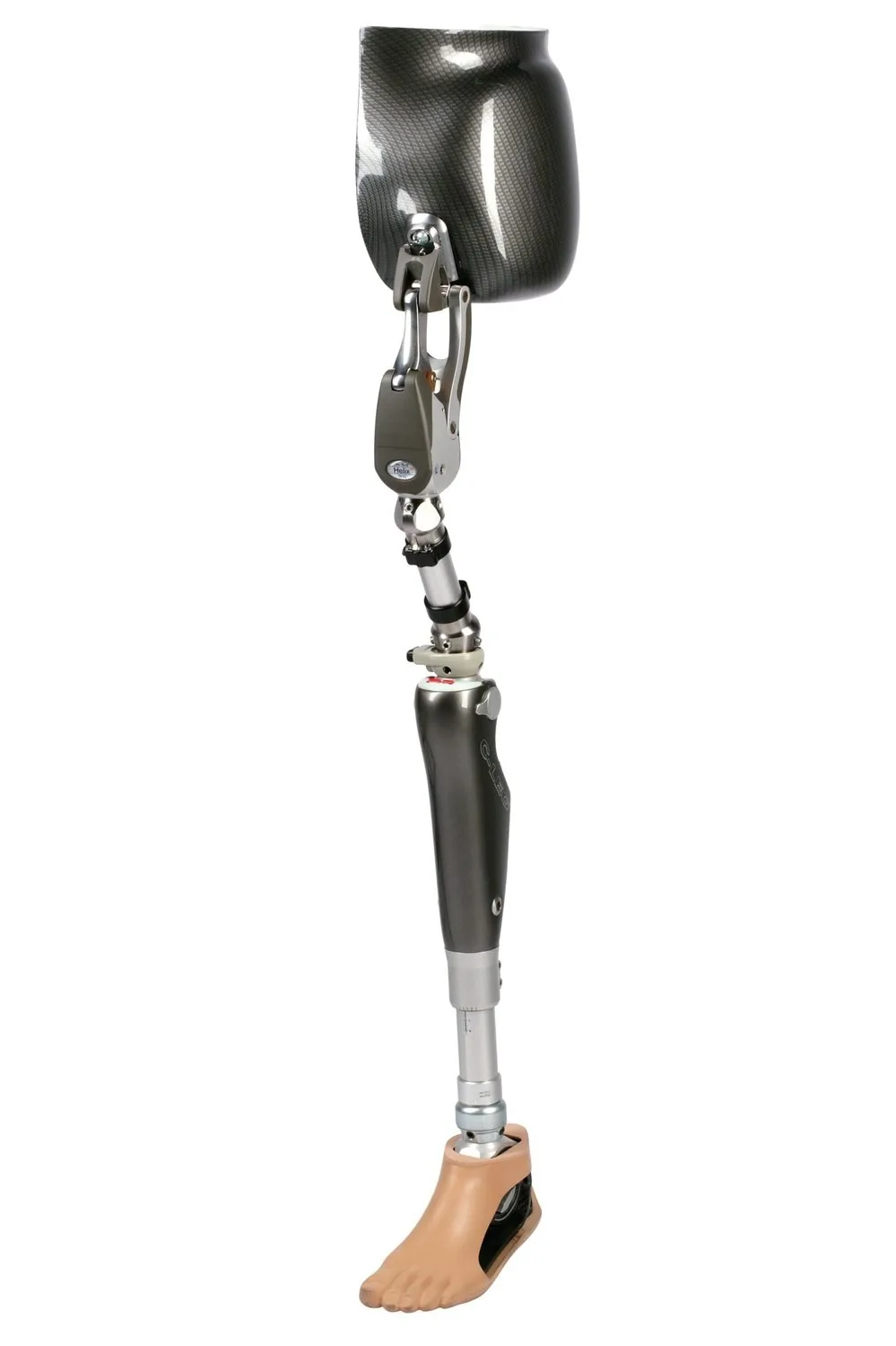
Why above-knee is more involved
Your knee normally provides stability when you stand and a smooth, controlled bend when you walk. After a transfemoral amputation, the prosthetic knee has to do both jobs, and your hip and core take on more of the work of controlling the limb. That is why above-knee walking takes substantially more energy than below-knee walking, and why training focuses heavily on balance, hip control, and trusting the knee.
The socket is everything
For above-knee users, the socket carries your weight and transmits every movement, so its design and fit are critical. Modern designs — including ischial-containment and newer sub-ischial sockets — aim to hold the thigh securely, distribute pressure comfortably, and give you control over the prosthesis. A great knee on a poor socket disappoints; a well-fitted socket is what lets the rest of the components do their job. For the small group of people who cannot achieve a comfortable socket, osseointegration offers a socket-free alternative.
Choosing a prosthetic knee
The knee unit shapes how stable and natural your walking feels. Options range from mechanical to electronic:
- Mechanical knees: single-axis, weight-activated stance, and polycentric (multi-axis) designs offer stability and durability, often a good fit for steady, predictable walking.
- Microprocessor knees: sensors read your movement many times a second and adjust resistance in real time, improving stability on stairs and slopes, helping recover from stumbles, and reducing the mental effort of walking.
Microprocessor knees can be especially valuable above the knee, where stability and fall prevention matter most. Whether one is right for you depends on your activity level, your goals, and coverage criteria — our companion guides on microprocessor knees and C-Leg vs Genium go deeper.
Recovery, step by step
Early weeks focus on healing, swelling control with a shrinker, and exercises for the hip and core that build the strength balance later depends on. Once healed, you’re fitted with a temporary prosthesis — casting, a test socket, then alignment with adjustable components — and because the limb keeps changing shape, expect frequent early adjustments. You can see the broader arc in our timeline from amputation to walking.
Training and balance
Learning to walk above the knee is a skill built in therapy: shifting weight onto the prosthesis, trusting the knee to support you, and developing a smooth, symmetrical gait before progressing to stairs, ramps, and uneven ground. Hip and core strength pay off in stability and stamina. People who commit to therapy consistently walk better and sooner — it is the single biggest controllable factor.
Living well afterward
Most people return to work, hobbies, and an active life, and many enjoy sport with the right setup — tell your prosthetist your goals so the device is designed for them. Daily skin checks, liner hygiene, and routine follow-ups (often around four times a year) keep things comfortable, and components can be updated as your needs change.
Falls, confidence, and stability
Stability is the theme that runs through above-knee rehabilitation, because a knee you don’t fully trust undermines everything else. Early on, many people walk cautiously while they learn to load the prosthesis and rely on the knee. Building hip and core strength, practicing weight shifts in therapy, and — where appropriate — choosing a knee with stumble recovery all reduce fall risk and, just as importantly, build the confidence that lets you move naturally. Confidence isn’t a soft factor here; it directly shapes how well you walk.
Questions about your own situation? A free consult is the fastest answer
We’ll assess your limb, talk through socket and knee options, and map a realistic path. Learn about our lower-limb prosthetics or book a free consultation.