
Prosthetic feet and ankles: from basic to microprocessor
The foot is where your prosthesis meets the ground with every step, so its design quietly shapes how stable, smooth, and effortless walking feels. Prosthetic feet and ankles range from simple and rugged to remarkably sophisticated. This guide walks through the spectrum and how the right one is matched to you.
The short version
There is no single best foot — only the best foot for your activity, weight, terrain, and goals. Basic feet prioritize stability and durability; energy-storing feet give active walkers a responsive push; hydraulic ankles adapt to slopes and uneven ground; and microprocessor ankles adjust in real time. Your activity level and coverage guide the choice.
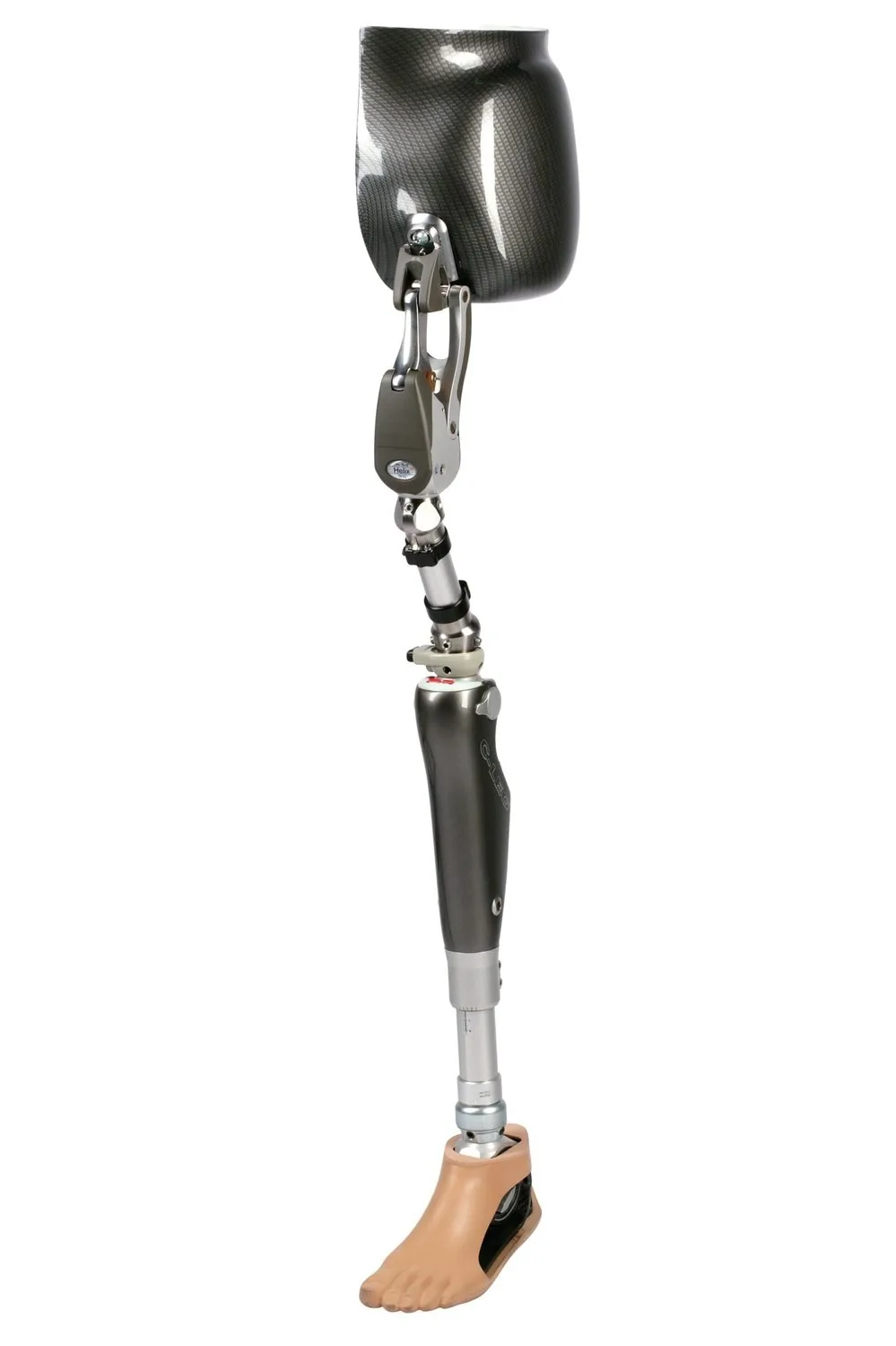
Basic feet
The most established designs — such as the SACH (solid-ankle cushion-heel) foot and single-axis feet — are simple, durable, and stable. They suit limited or careful walking and people who prioritize reliability and low maintenance. They don’t store much energy, but for the right user they do exactly what’s needed.
Multi-axis feet
Multi-axis feet add movement in more directions, so the foot can better conform to uneven ground and reduce stress on the limb. For people who walk on varied surfaces, that adaptability adds comfort and a more secure feel underfoot.
Energy-storing (dynamic) feet
Made largely of carbon fiber, energy-storing feet flex under load and spring back, returning some energy with each step. For active walkers, that responsiveness makes walking feel smoother and less tiring and supports faster, more dynamic movement. They are among the most popular feet for community and active users.
Hydraulic ankles
A hydraulic ankle adds a fluid-controlled joint that lets the ankle flex and adapt as the ground changes. The practical benefits show up on slopes, stairs, and uneven terrain, and when standing — the foot can sit flatter and more naturally, easing strain on the limb and the sound side. For people who spend time on varied ground, a hydraulic ankle can be a comfortable, sure-footed upgrade over a fixed ankle.
Microprocessor ankles and feet
At the advanced end, microprocessor ankle-foot systems use sensors and a processor to adjust the ankle in real time — raising the toe to clear the ground when you swing the leg, adapting to ramps and stairs, and accommodating different shoe heels. For the right user, they can improve safety and reduce the effort of difficult terrain. Like other electronics, they require charging and maintenance, and the benefit is weighed against the added complexity and cost.
How the right foot is chosen
Matching a foot to a person balances several things: your potential activity level (often described with K-levels), your weight, the terrain you cover, your goals, and what your coverage supports. The foot also has to be tuned to the rest of your prosthesis — alignment ties it all together. The best way to choose is to trial options and feel the difference, which is exactly what fitting is for. And if you have had a partial-foot amputation, the approach is different again — see our dedicated guide.
Matching the foot to the rest of your prosthesis
A foot is never chosen in isolation — it works as part of a system with your socket, alignment, and (for above-knee users) your knee. A responsive energy-storing foot pairs naturally with an active build; a stable foot complements a setup focused on security. For microprocessor knee users, foot choice and alignment influence how smoothly the whole limb behaves. This is why fitting matters as much as the component list: the same foot can feel completely different depending on how the prosthesis around it is tuned.
Questions about your own situation? A free consult is the fastest answer
We’ll match a foot and ankle to how you actually live. Learn about our lower-limb prosthetics and technology, or book a free consultation. Fitting and alignment happen in person, at Justice, Tinley Park, Munster, Rockford, Las Vegas, or Henderson.